 Body Shape Calculator
Waist-to-hip ratio is your waist circumference divided by your hip circumference. The World Health Organization defines abdominal obesity as a waist-to-hip ratio above 0.85 for women and above 0.90 for men.
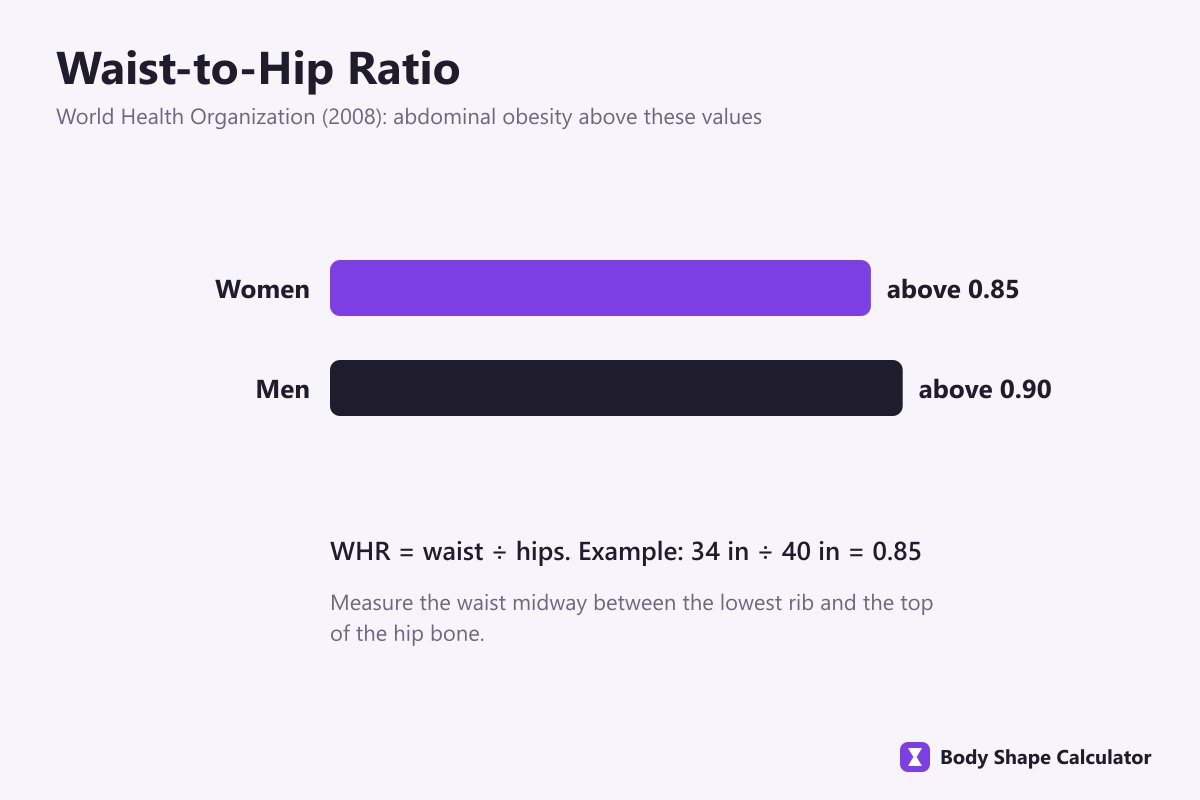
Waist-to-hip ratio (WHR) shows how much of your body width sits at the waist compared with the hips. A higher waist-to-hip ratio means more weight around the waist. The waist-to-hip ratio calculator below uses the World Health Organization measuring points and cut-offs from its 2008 expert consultation on waist circumference and waist-hip ratio. The results are information, not medical advice.
How Do You Calculate Waist-to-Hip Ratio?
You calculate waist-to-hip ratio by dividing your waist measurement by your hip measurement, using the same unit for both.
| Example | Waist | Hips | Calculation | WHR |
|---|---|---|---|---|
| Inches | 34 in | 40 in | 34 ÷ 40 | 0.85 |
| Centimeters | 75 cm | 95 cm | 75 ÷ 95 | 0.79 |
The waist-to-hip ratio has no unit, so inches and centimeters give the same result.
How Should You Measure Waist and Hips for Waist-to-Hip Ratio?
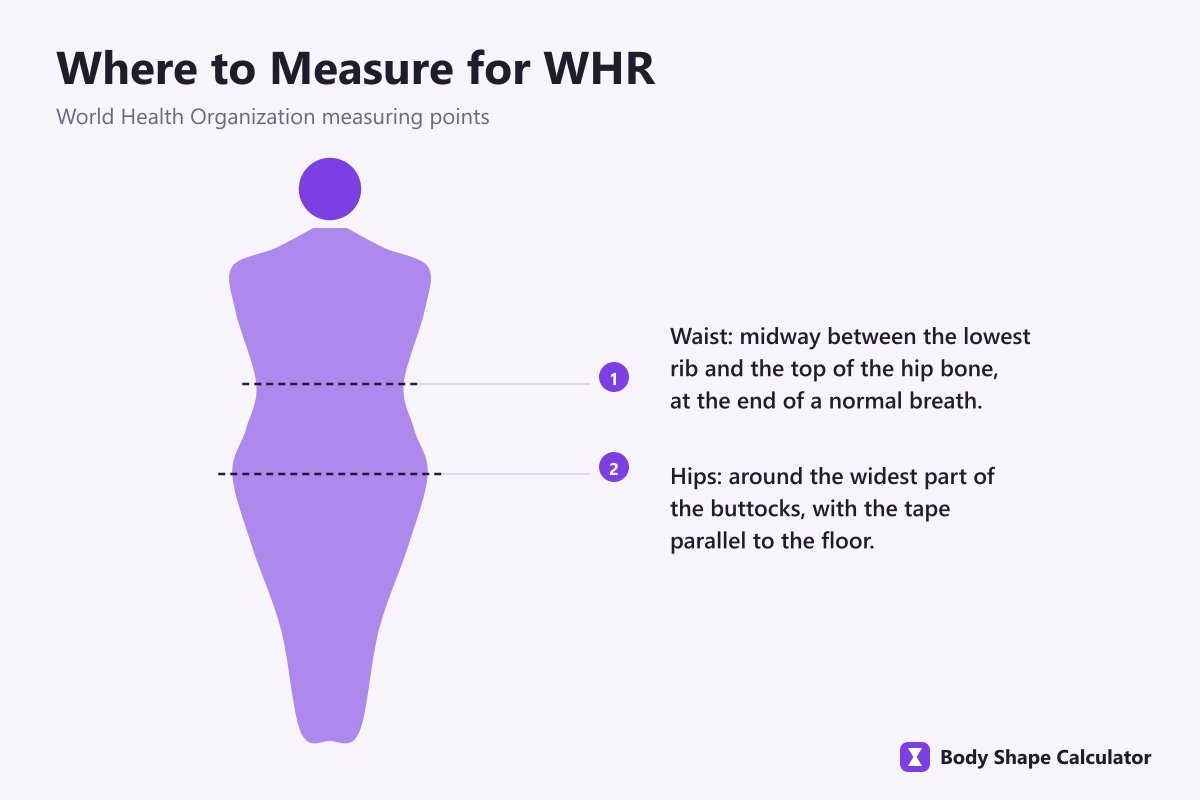
You should measure waist and hips for waist-to-hip ratio at the points the World Health Organization uses, listed below.
- Waist: midway between the lowest rib and the top of the hip bone, at the end of a normal breath.
- Hips: around the widest part of the buttocks, with the tape parallel to the floor.
Stand with your feet close together and your arms at your sides. Measure each point twice and use the average when the two readings are within 1 cm (0.4 in). The waist point for waist-to-hip ratio differs from the "narrowest waist" point used for body shape, so the measuring guide for bust, waist and hips explains both.
What Is a Healthy Waist-to-Hip Ratio?
A healthy waist-to-hip ratio is 0.85 or below for women and 0.90 or below for men, according to the World Health Organization cut-offs for abdominal obesity.
| Source | Women | Men | Meaning |
|---|---|---|---|
| World Health Organization (2008) | above 0.85 | above 0.90 | abdominal obesity |
| NIDDK | 0.80 or above | 1.0 or above | predominant abdominal obesity |
The World Health Organization values are used across this site.
What Does Waist-to-Hip Ratio Say About Body Shape?
Waist-to-hip ratio shows where width sits, which links it to body shape. An apple-shaped figure has a high waist-to-hip ratio, because the waist is equal to or larger than the hips. Pear and hourglass body shapes have a lower waist-to-hip ratio, because the hips are much wider than the waist. The guide to body shape and health explains why fat at the waist matters more than fat at the hips.
Is 0.85 a Healthy Waist-to-Hip Ratio?
A waist-to-hip ratio of 0.85 is at the World Health Organization limit for women and below the limit for men. A woman's ratio above 0.85 meets the WHO definition of abdominal obesity.
Is Waist-to-Hip Ratio Better Than BMI?
Waist-to-hip ratio and BMI measure different things: BMI compares weight with height, while waist-to-hip ratio shows where fat sits. The World Health Organization reviewed waist measures as predictors of disease risk alongside BMI rather than as a replacement for it.
What Waist-to-Hip Ratio Is Considered Attractive?
Studies on attractiveness and waist-to-hip ratio exist, but their results depend on culture and study design, so this site does not rank ratios by attractiveness.